
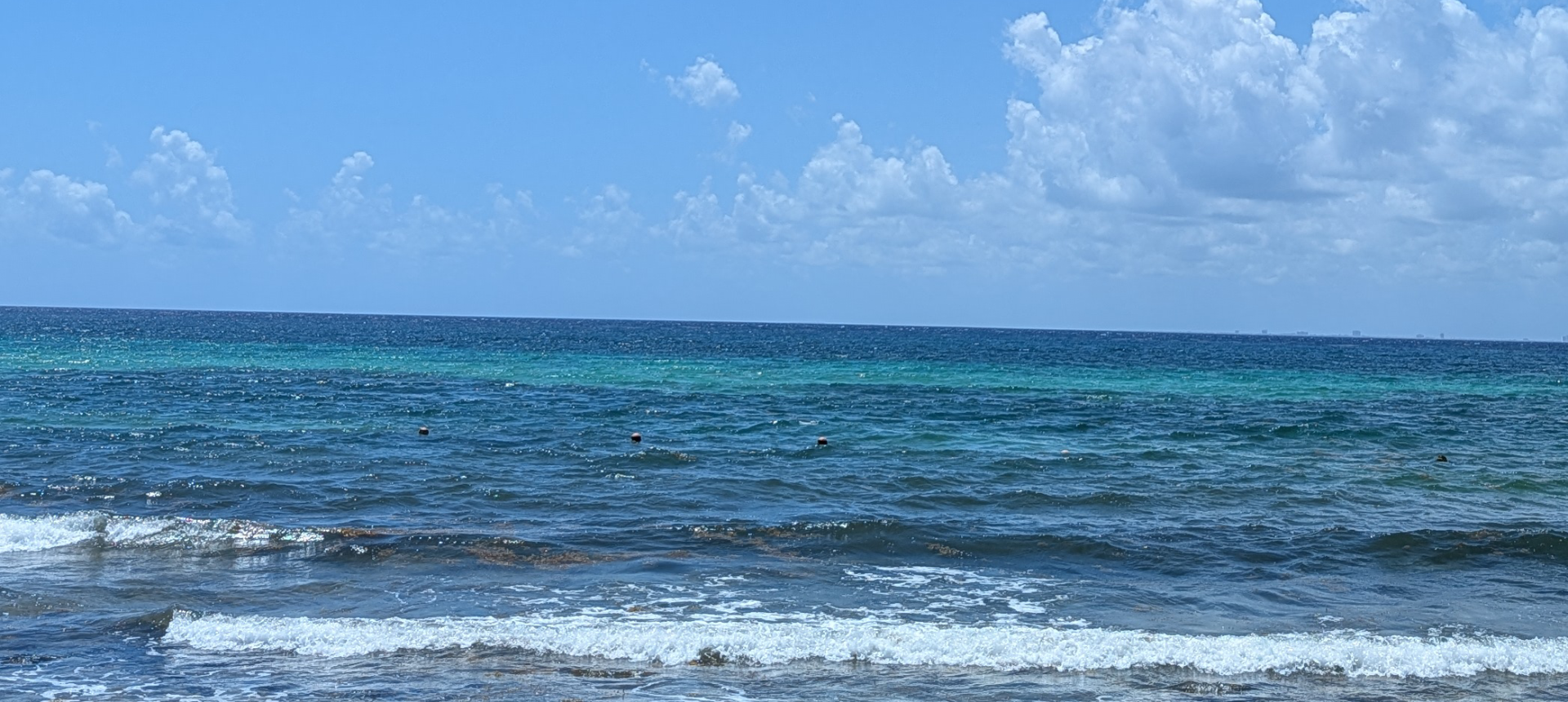
I just spent ten days on the beaches of Mexico, engaging in what I consider a nervous system reset: the sound of ocean waves, the proprioceptive augmentation inspired by endless floating in warm pools of water, deep sun and humidity and jungle greenery infusing all of the senses. Timelessness and effortlessness and spaciousness.
And I am so fucking lucky to experience that.
Over the past several years, it has been difficult for me to read fiction. I just couldn’t focus and stay immersed enough to truly enjoy it. This was incredibly sad to me because, up until my mid-30s, one of my favorite solo pastimes was to curl up on the couch, in a hammock, in bed, or at an airport with a great novel and just slide into my imagination. It brought me a wealth of life experiences and emotions I would never have had the opportunity to experience on my own, and it taught me about the world as a little girl, stomping through evergreen forests and trying to find my place in the midst of a somewhat hostile cultural environment.
So losing my ability to imagine: that was a big fucking deal. But its arrival was absolutely within the context of my own, individual struggle to authentically dream for myself. I had become a functional reactive, surfing the ever-changing chaos and feeling that I had limited control; even in moments that I felt agency or that I was taking action that was positive and on a path to learning or happiness or discovery, I see that, in retrospect, it was simply a case of physics at work. For every action there is a reaction and I was squarely inhabiting the reaction space — whether I knew it or not.
I think that pretzeling myself into a form that fit what I thought were the available structures around me began to prune my synapses, in a way. Like an infant set in front of a glittery, high-intensity cartoon on an iPad so her parents can eat breakfast in peace, whole swathes of my perception slowly peeled away, dropping like so many maple seed pods, careless and flitting on the wind. A bit of a nuisance to clean up, really.
But those seed pods floated into a bog, fetid and murky; so deep and sonorous that its layers were imperceptible to me for years. At first, all I could do was kind of smell it: wafting in on the steam while sitting in the bath, popping up as a rapid memory-triggering base note to the spicework in my cooking (where have I smelled that before?!), floating past me as I walked through crowds — capturing a whiff but just once, causing me to sniff and search for more. But then, there were glimpses, snapshots of vibrant moments that felt like memories and also dreamscapes, a confusing blend of fantasy and reality that hinted at something brighter ahead.
Now, while I was navigating my own personal sensory deprivation and recovery landscape, the world around me was also hard at work, dissembling and decompensating, rewinding and entrenching, fracturing in such a horrific and cruel way that it mirrored aspects of my own id-destruction so that not only did it all seem perfectly in line with itself, it felt inevitable. It wasn’t cynicism that led us to this place; rather, it was our inability to imagine.
The lack of imagination is rife in the rhetoric we see around us: erasing decades of work to realize imagined dreams and reasserting mores, practices, and abuses rooted in the days of yore, billed as a halcyon system that brought endless happiness to those who adhered to it. To maintain imagination and wonder in the face of the utterly banal is a revolutionary act, and doesn’t require anything other than curiosity: How can this be different? The answer to that is manifold and quite gorgeous, but sometimes it can be terrifying in the chaos that such a difference would sow within the confines we have been socialized to believe is reality. But imagination also takes time, and the ability to daydream, and to sit and contemplate one’s navel in the manner set forth by Ferdinand the Bull.
So the simplest way to truncate imagination is to remove the time to employ and explore it. This is currently being performed at a systemic level through ever-increasing assaults on basic human rights, ever-increasing inflation requiring us all to maintain several types of work just to make ends meet, and ever-increasing global corruption making us feel somewhat powerless and exhausted and cynical and sad. We are living in a continuous street-level shell game, where the Queen is our imagination, and we can never find her amidst the remaining cards.
While these external pressures also contributed to my loss of imagination, my internal pressures related to biochemistry, historical trauma, deep and unresolved scars, and a terrific sadness that has seemed to always perforate the edges of my days, contributed to my inability to conjure images in my head, even when proffered by a talented writer. And it disabled my own sense of dreaming outside the boxes I had assigned myself, reactionary movements born of a deep poverty of self-love.
Many gifts have arrived over the past seven years. Even though I made choices based not on gilded dreams or joyful ambition, I have still discovered deep treasure. My bonus kids, my puppies, my outlaws, my knowledge expansion, my newfound and deeply loved vocation — all of them arrived in spite of choices I made that were not, on balance, in my best interest. But they found me, anyway. And the pain that singed the fingerprints of my heart, my curiosity, my self-love became an etching that mapped a different way of relating to the world. Each of these tiny seed pods, finding purchase in a somewhat ill-maintained bog of a garden, nevertheless rooted and unfurled vibrant red-and-green filigreed leaves.
And now, the bog is a mangrove forest, rich and pungent and rife with coatis and spider monkeys, capybaras and butterflies, swinging and playing and darting through the trees, sometimes stealing a piece of fish off the plate of an unsuspecting human whenever they have the chance. And now, I can read fiction again, and with pleasure. Finishing Mexican Gothic with a sense of curiosity and excitement and a deep hunger for more felt like one of the most glorious acts of self-love I have engaged in in recent memory.
Reflecting on this past seven-year cycle has inspired me to find those bits of glittering worth that laced even the darkest moments with enough light to see me through. I try to remember that during each of those difficult, desperate, and banal days, moments when I simply wanted to disappear, I held one thing to be true: I just had to make it through that day, and things would look different tomorrow.
Now I see that the only way I could have believed that is through imagination, and so even though I felt for so long that I had lost my ability to dream, it was with me the whole time. Urging me to conjure something beautiful.
And so I am.
Discover more from hyperpetal
Subscribe to get the latest posts sent to your email.


